Group Landing
37 mi north · USDA Forest Service
Group Landing is a secluded area that offers a flexible space accommodating many outdoor activities, from a weekend family camping trip to a midweek company picnic.
Outdoors
Lakes, rivers and recreation areas near Gainesville where fishing is allowed, closest first.
Good to know: Anyone 16 or older generally needs a state fishing license; seasons, limits and special rules vary by water. Florida license information ↗
37 mi north · USDA Forest Service
Group Landing is a secluded area that offers a flexible space accommodating many outdoor activities, from a weekend family camping trip to a midweek company picnic.
38 mi southeast · USDA Forest Service
Lake Shore Group Campground sits on the north shore of Fore Lake in Ocala National Forest. It is a favorite for scout, church and civic groups, as well as large families and reunions.
39 mi north · USDA Forest Service
Situated in Baker County, Florida, this campground includes 64 campsites and is open 24 hours/day. All sites are available at recreation.gov. There's something here for everyone in this lakeside campground.
Map of 23 places loads as you scroll.
Group Landing is a secluded area that offers a flexible space accommodating many outdoor activities, from a weekend family camping trip to a midweek company picnic.
Lake Shore Group Campground sits on the north shore of Fore Lake in Ocala National Forest. It is a favorite for scout, church and civic groups, as well as large families and reunions.
Situated in Baker County, Florida, this campground includes 64 campsites and is open 24 hours/day. All sites are available at recreation.gov. There's something here for everyone in this lakeside campground.
Salt Springs Recreation Area is one the recreational jewels of the Ocala National Forest, with a spectacular natural mineral spring that gives the area its name.
The refuge is bisected by 20 miles of the famous Suwannee River and includes 30 miles of coastal marsh habitat along the Gulf of Mexico.
Juniper Springs Campground is one of the most popular campgrounds in the Ocala National Forest. The location offers deeply shaded sites within walking distance of some of Florida's most beautiful natural springs.
Doe Lake is a group campsite with a variety of activities. Centered around a historic lodge with a large group kitchen, it's an ideal place for major outdoor gatherings of up to 250 people.
Chassahowitzka NWR was established in 1943 for waterfowl conservation. The refuge protects saltwater bays, estuaries, brackish marshes, and hardwood swamps in Homosassa, FL.
Crystal River National Wildlife Refuge, established in 1983, is the only refuge created specifically for the protection of the threatened Florida manatee, a subspecies of the West Indian manatee.
Buck Lake is a group camping facility in the heart of Ocala National Forest in Florida. Great for family reunions and social gatherings, the campground can host a group of up to 50 guests along the shores of Buck Lake.
Cedar Keys National Wildlife Refuge was established in 1929 by President Herbert Hoover to protect a breeding ground for colonial nesting migratory birds during a time when market hunters, desiring feathers for the ladies' apparel…
Alexander Springs Recreation Area is located in the Ocala National Forest near the beautiful, turquoise waters of Alexander Springs.
Lake Dorr Cabin is set along the south shore of beautiful Lake Dorr, ideal for a family getaway. The cabin is open year-round and creates a great setting for plenty of outdoor water fun.
Clearwater Lake Recreation Area offers a quiet getaway along the southeastern edge of the Ocala National Forest, just outside the community of Paisley, Florida.
Lake Woodruff National Wildlife Refuge was established in 1964 as a migratory bird refuge to offset losses of wetland habitat that were occurring in central Florida.
River Forest is a shaded group camping facility on the shores of the St. Johns River in Ocala National Forest.
The Okefenokee National Wildlife Refuge was established in 1937 as a "refuge and breeding ground for migratory birds and other wildlife.” The refuge conserves the unique features of the Okefenokee Swamp,the headwaters of the Suwannee and…
Whether you are looking to spend a night with family and friends around a campfire under the moss covered branches of the live oak trees, or looking for the rugged challenges and solitude of the wilderness, you will find it on Cumberland…
The Banks Lake National Wildlife Refuge was established in 1985 under the Fish and Wildlife Act of 1956 and the Land and Water Conservation Fund Act of 1965.
The Refuge was established in 1931 to provide wintering habitat for migratory birds. It is one of the oldest refuges in the National Wildlife Refuge System.
Discover a dynamic barrier island shaped by dunes, coastal hammocks, and Mosquito Lagoon. Walk among ancient Timucua shell mounds and connect with thousands of years of human history.
The refuge traces its beginnings to the development of the nation’s Space Program. In 1962, NASA acquired the lands and waters adjacent to Cape Canaveral to establish the John F. Kennedy Space Center.
Wolf Island National Wildlife Refuge, which also includes Egg Island and Little Egg Island, is located at the mouth of the Altamaha River on the Georgia coast.
Distances are straight-line miles from downtown Gainesville. Listings come from Recreation.gov’s federal recreation database; check each official page for hours, fees, fire restrictions and closures before you go.

A WALK AROUND TOWN
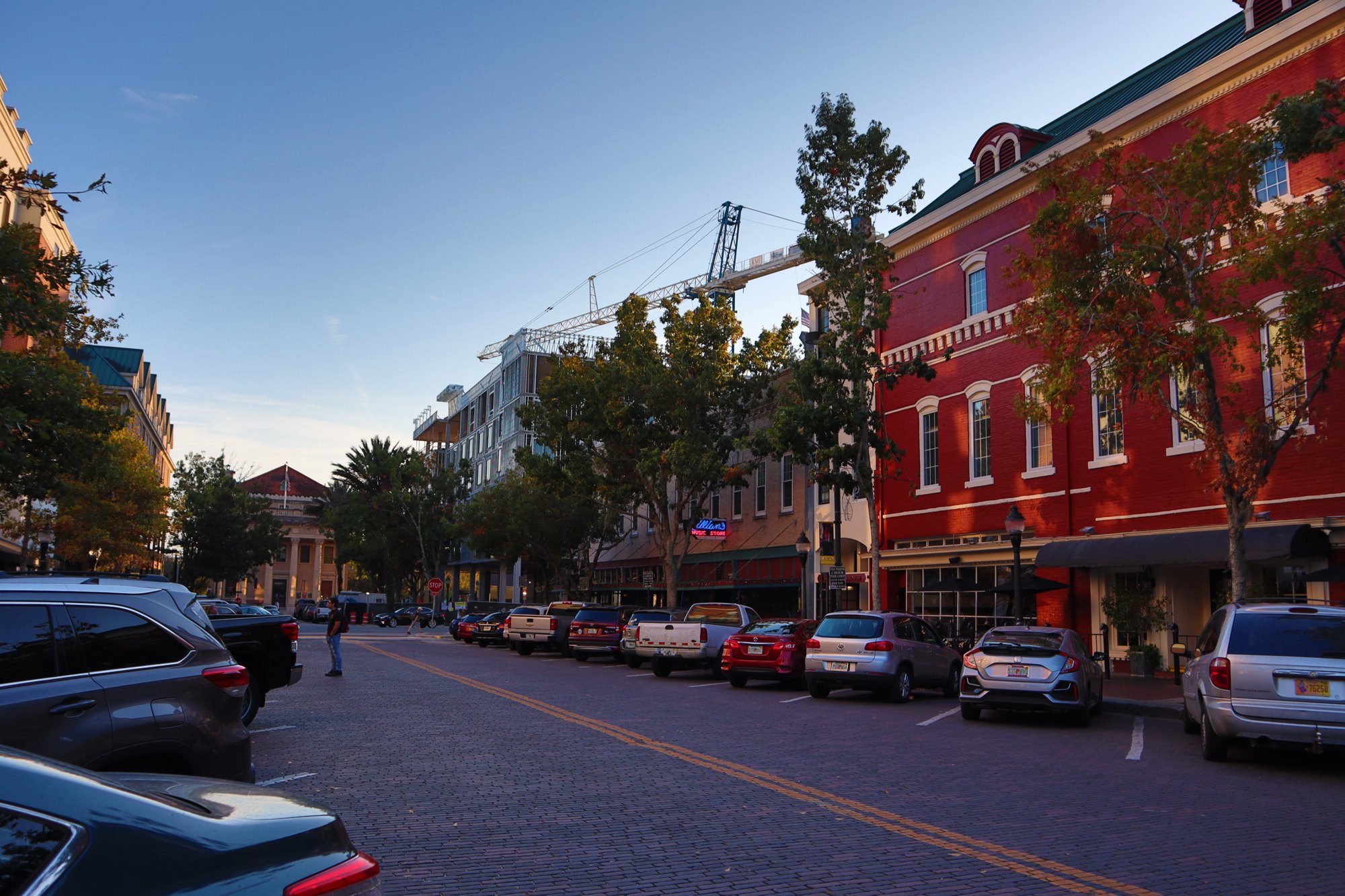
A recorded downtown Gainesville walk, passing University Avenue, storefront blocks and the clock-tower area. Shared by Florida Streaming; the creator’s closing graphics are part of the original film.
Watch on YouTube ↗
A WALK AROUND TOWN
A short recorded walk along downtown Gainesville’s palm-lined streets and pedestrian areas, including The Promenade. Shared by City Walk USA.
Watch on YouTube ↗Group Landing (USDA Forest Service), about 37 miles north of Gainesville as the crow flies. Next are Lake Shore Group Camp (38 mi) and Ocean Pond Campground (39 mi).
Yes, anglers 16 and older generally need a Florida fishing license from the state wildlife agency. Rules, seasons and limits vary by water.
Federal agencies including USDA Forest Service, Fish and Wildlife Service, National Park Service. Each listing links to its official page for hours, fees, closures and current conditions.